Laurel Street Overcrossing — UHPC Bridge Replacement
The Laurel Street Overcrossing Replacement in Vallejo was Caltrans' first multi-span Accelerated Bridge Construction pilot and the first use of UHPC connections between precast elements in California.
Overview.
The Laurel Street Overcrossing Replacement addressed a 60-year-old bridge spanning Interstate 780 in Vallejo, just east of the I-780/I-80 interchange. Beyond routine replacement, this project served as a technology pilot for Caltrans — validating Accelerated Bridge Construction (ABC) methods and Ultra-High Performance Concrete (UHPC) connections for potential statewide deployment. The project was delivered by RNR Construction, Inc. (now DNB Infrastructure, Inc.) of Sacramento, with completion in January 2018. Below is a detailed breakdown of the project:
Project goals.
The primary objectives of the Laurel Street Overcrossing Replacement were:
To replace the structurally deficient 60-year-old bridge with a new 200-foot, two-span structure using precast elements and Accelerated Bridge Construction methods.
To demonstrate and validate UHPC-filled corrugated metal duct connections for seismic load transfer between precast columns and cap beams — the first such application in California.
To perform two full-scale structural concrete mock-ups (pullout strength and fit-up/placement) prior to field construction to verify contractor means and methods for UHPC handling.
To minimize traffic disruption on I-780 by executing demolition and erection under overnight closures rather than extended lane shutdowns.
"This project proved that precast bridge elements connected with Ultra-High Performance Concrete can meet California's seismic demands. The mock-ups gave Caltrans the confidence to deploy these methods — and every connection performed exactly as designed."
Key solutions implemented.
The existing bridge was demolished over 10 consecutive overnight full closures of I-780, with debris removed and the work zone cleared before morning traffic each night. This phased demolition approach eliminated the need for extended multi-day freeway closures through the Vallejo corridor.
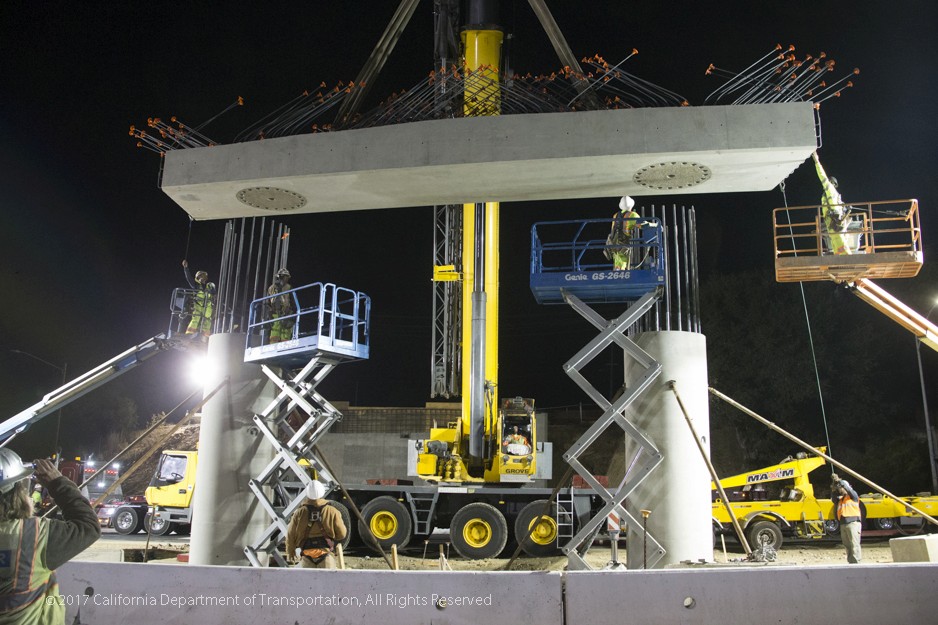
The new bridge was erected using precast solid circular columns and a precast rectangular drop cap, all manufactured off-site and transported to the project. Seismic connections between columns and the cap beam were achieved using UHPC-filled corrugated metal duct connections — a system where reinforcing bar extensions from the columns are grouted into ducts cast into the cap beam using Ductal UHPC supplied by LafargeHolcim. Two full-scale structural concrete mock-ups were performed before field placement: a pullout strength test validating UHPC bond capacity and a fit-up and placement mock-up verifying erection tolerances, UHPC mixing procedures, and Caltrans quality assurance protocols.
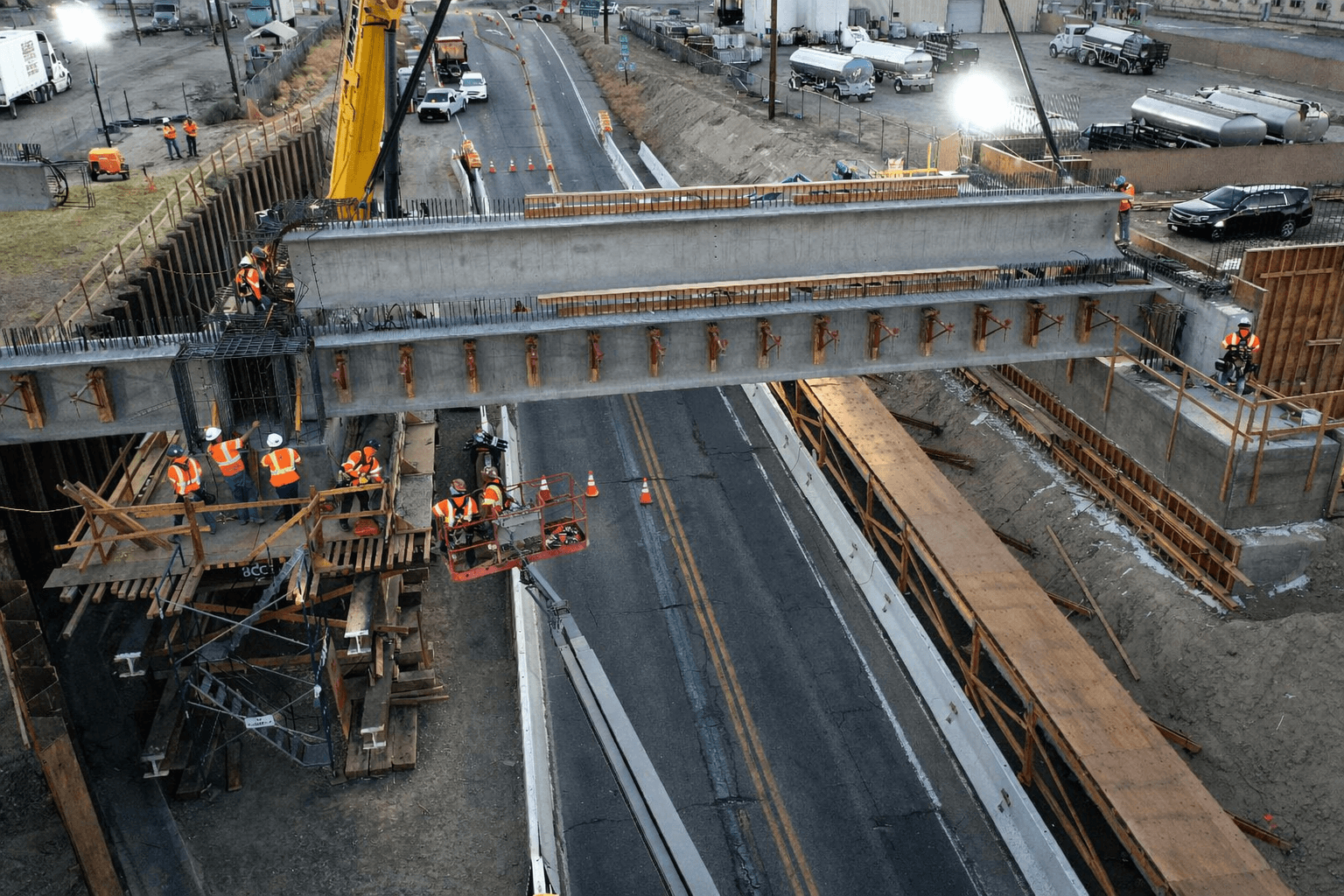
Substructure erection — both columns and the 148.5-kip drop cap — was completed in approximately three hours during a single overnight operation. Ten precast California wide-flange girders, each weighing 95 kips and measuring 98 feet long, were set on the completed substructure. The bridge deck was placed using Rapid Strength Concrete batched on-site, achieving 4,000 psi compressive strength within four hours and allowing the bridge to be opened to traffic on an accelerated timeline.
Outcomes achieved.
ABC milestone: First multi-span Accelerated Bridge Construction project completed by Caltrans.
UHPC first: First use of Ultra-High Performance Concrete to connect precast bridge elements in California.
Erection speed: Full substructure — columns and 148.5-kip cap beam — erected in three hours during a single overnight closure.
Deck strength: Rapid Strength Concrete reached 4,000 psi in four hours, enabling accelerated opening to traffic.
Mock-ups completed: Two full-scale UHPC structural mock-ups validated connection performance before field construction.
The Laurel Street project established the technical and procedural foundation for Caltrans to deploy Accelerated Bridge Construction and UHPC connections on future projects statewide, demonstrating that precast seismic bridge systems can be erected rapidly without sacrificing structural performance.