Lake Isabella Dam Safety Modification
The Lake Isabella Dam Safety Modification Project raised and strengthened the existing dam to address seismic stability and seepage concerns. Work spanned large-scale excavation, emergency spillway construction, labyrinth weir installation, embankment placement, and modifications to State Route 155.
Overview.
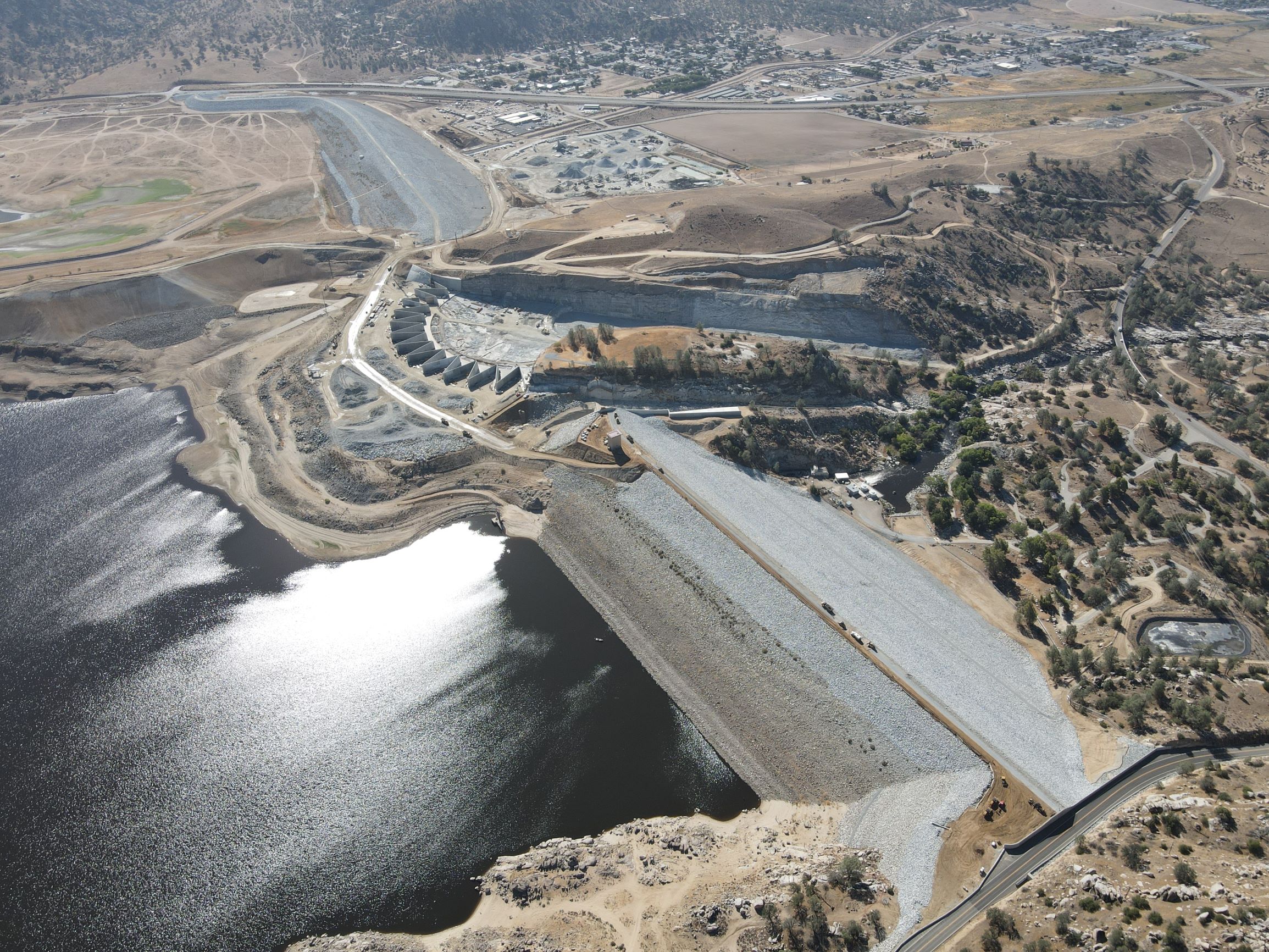
The Lake Isabella Dam Safety Modification Project addressed critical safety deficiencies at what was once classified as the most dangerous dam in America and USACE's top dam safety risk nationwide. Originally completed in 1953 on the Kern River in Kern County, both the main and auxiliary dams faced risks from overtopping, seepage, and seismic instability caused by a recently identified active fault. Operating restrictions had reduced the reservoir to roughly 60% of its 568,000 acre-foot capacity, impairing flood management and irrigation supply for over 350,000 downstream residents and 350,000 acres of farmland. Below is a detailed breakdown of the project:
Project goals.
The primary objectives of the Lake Isabella Dam Safety Modification were:
To raise both dams 16 feet and buttress downstream embankments to prevent overtopping during extreme flood events.
To install new foundation zone blankets, filtering systems, and drainage infrastructure to control seepage through and beneath both dams.
To construct a new 300-foot-wide emergency spillway with USACE's first-ever labyrinth weir to safely pass probable maximum floods.
To abandon and fill the legacy Borel Canal conduit running through the auxiliary dam to eliminate internal erosion risk.
"This project is transformative for the Kern River Valley. It restores full flood protection, secures water supply for hundreds of thousands of residents and farmers, and sets a new standard for dam rehabilitation nationwide."
Key solutions implemented.
The modification began with raising both the main dam and the auxiliary dam by 16 feet using zoned embankment fill. Approximately 3.5 million cubic yards of earth were excavated and 2.3 million cubic yards of fill placed, with all granitic rock drilled, blasted, crushed, and processed entirely on-site from local quarry sources — eliminating the need for material import across the remote site.
A new 300-foot-wide emergency spillway was constructed featuring a 28-foot-tall labyrinth weir — an accordion-shaped concrete structure whose zig-zag walls stretch approximately 3,000 feet if straightened. The design was validated through a 1:45 scale physical model and secured with 35-foot-long anchor bolts. This was the first labyrinth weir ever constructed by USACE.
Foundation stabilization required excavation approximately 10 feet deep at the main dam and 30 feet deep at the auxiliary dam, where poor alluvial soils and the active fault demanded significantly more intervention. New zone blankets, filter layers, and drainage systems were installed beneath both structures. The abandoned Borel Canal conduit, which ran through the center of the auxiliary dam, was demolished and filled with light cellular concrete to eliminate internal erosion pathways.
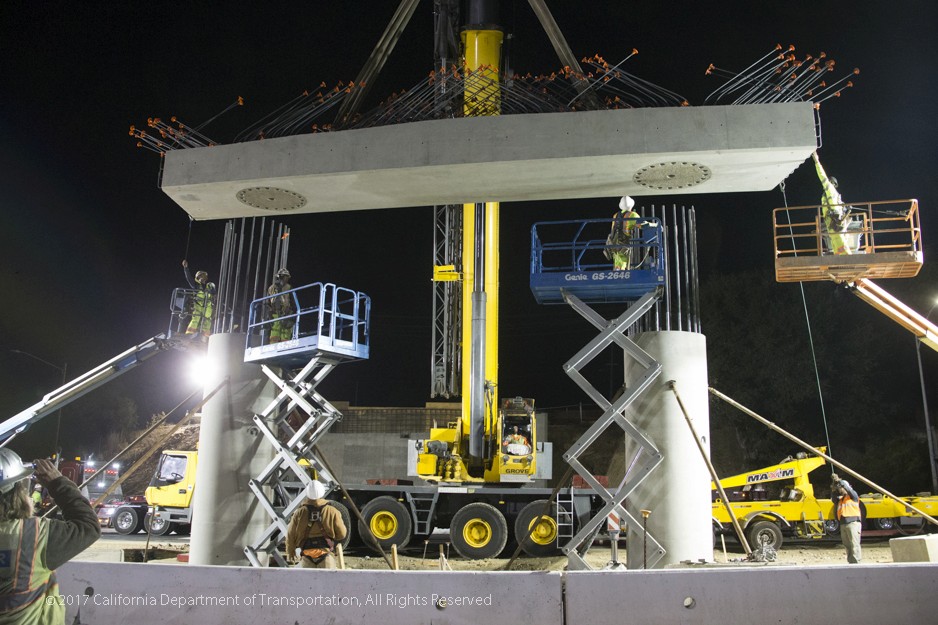
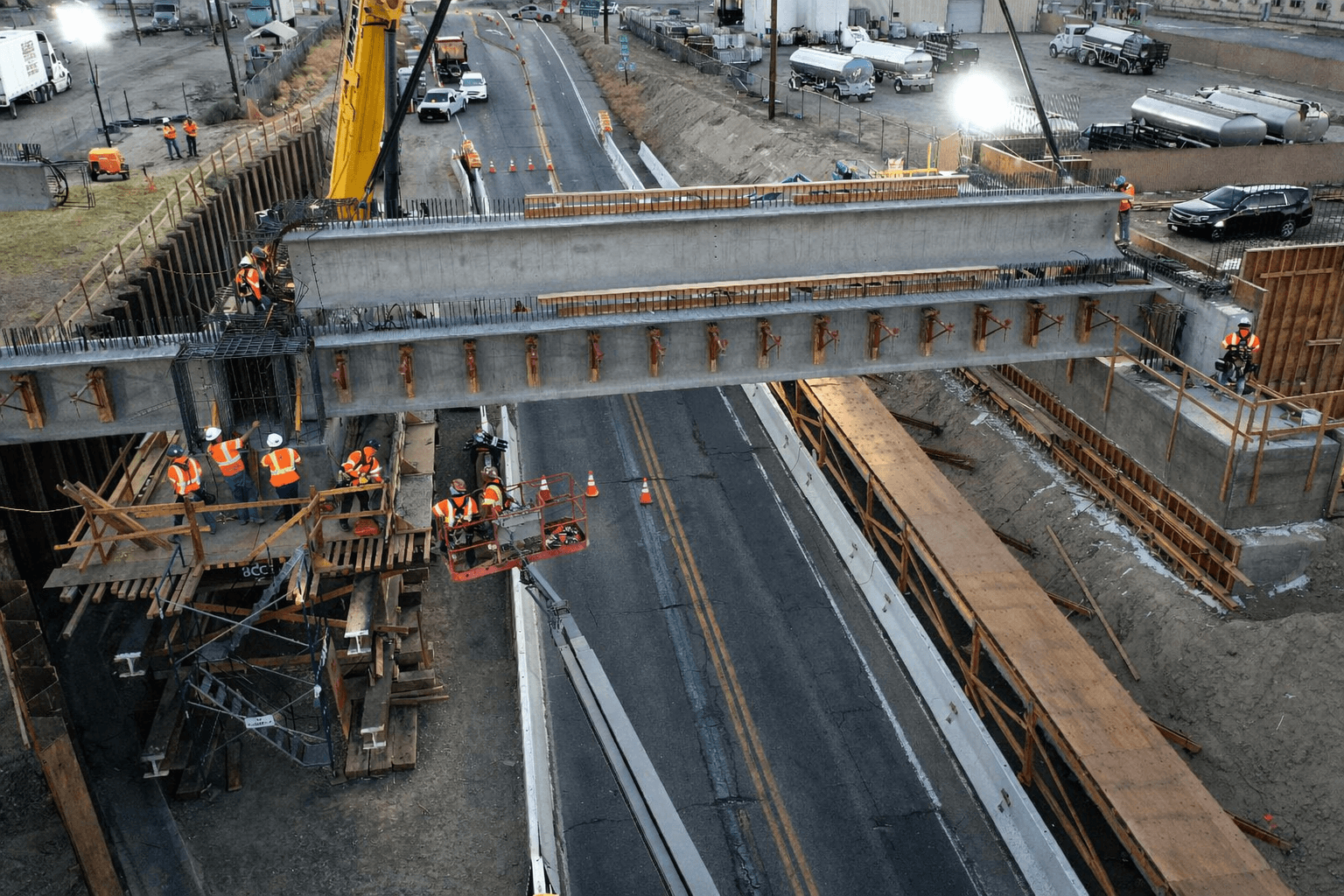
Additional work included modifications to State Route 155 at the main dam's right abutment, construction of two replacement U.S. Forest Service facilities, and continuous coordination with dam operations staff to maintain reservoir functionality throughout the five-year construction period.
Outcomes achieved.
Earth moved:
3.5 million cubic yards excavated; 2.5 million cubic yards of rock blasted and processed on-site.Structural concrete:
Over 54,000 cubic yards placed, including the labyrinth weir and spillway structures.Safety record:
2.6 million labor hours completed with zero significant accidents or injuries.Completion:
Delivered under budget at $323 million (Phase 2) with a ribbon-cutting ceremony held April 2023.Recognition:
2023 National Rehabilitation Project of the Year (ASDSO), 2023 Excellence in a Constructed Project of the Year (USSD), 2023 CMAA Project Achievement Award.