High-Speed Rail CP-4
The California High-Speed Rail CP-4 project constructed 22 miles of high-speed rail guideway through the southern Central Valley, from the Tulare-Kern County line to north of the City of Shafter. Work included 11 grade separations and viaducts, 4 miles of BNSF railroad track relocation, 143 utility relocations, and at-grade guideway embankments designed for speeds of 220 mph.
Overview.
Construction Package 4 delivered a 22-mile segment of California's high-speed rail corridor through Kern County, traversing flat agricultural land through and around the City of Wasco. The alignment crossed multiple state routes, county roads, the BNSF Railway mainline, and several agricultural water district facilities. The design-build contract was executed by California Rail Builders, a joint venture of Ferrovial and Griffith Company, with HNTB Corporation serving as Project Construction Manager. Below is a detailed breakdown of the project:
Project goals.
The primary objectives of the CP-4 construction were:
To construct 22 miles of high-speed rail guideway including at-grade embankments, retained fill structures, and aerial sections at road and railroad crossings.
To build 11 major structures including viaducts, overpasses, underpasses, and grade separations while maintaining existing traffic and rail operations.
To relocate 4 miles of active BNSF freight railroad track and coordinate 143 utility relocations across PG&E, water districts, and telecommunications providers.
To acquire and clear 223 right-of-way parcels with 88 land rights conveyances across the alignment corridor.
"CP-4 demonstrates how complex multi-agency infrastructure can be delivered through coordinated design-build execution. The structures built here — including record-setting precast girder spans — will carry high-speed trains through the Central Valley for generations."
Key solutions implemented.
The project began with extensive utility relocation and right-of-way clearance across 22 miles of agricultural land. A total of 143 utility relocations were completed, including 62 PG&E design packages for electric, gas, and communication lines, along with agricultural water infrastructure relocations through North Kern Water Storage District, Shafter-Wasco Irrigation District, and Semitropic Water Storage District.
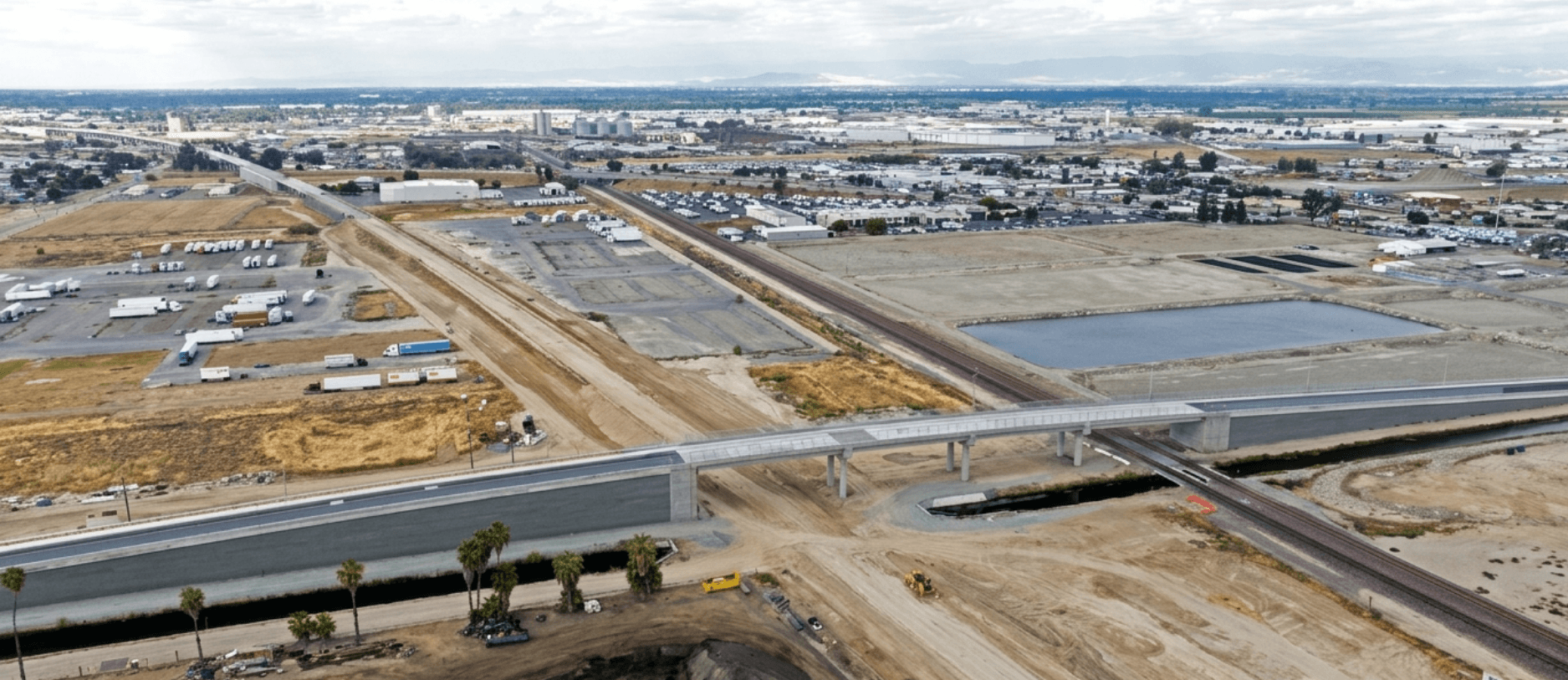
BNSF Railroad coordination was a dominant scope element. Four miles of active BNSF freight tracks were relocated, including two temporary shoofly detour tracks through Wasco totaling over 32,000 linear feet of new mainline and temporary track, with 45 utility relocation applications coordinated directly with BNSF.
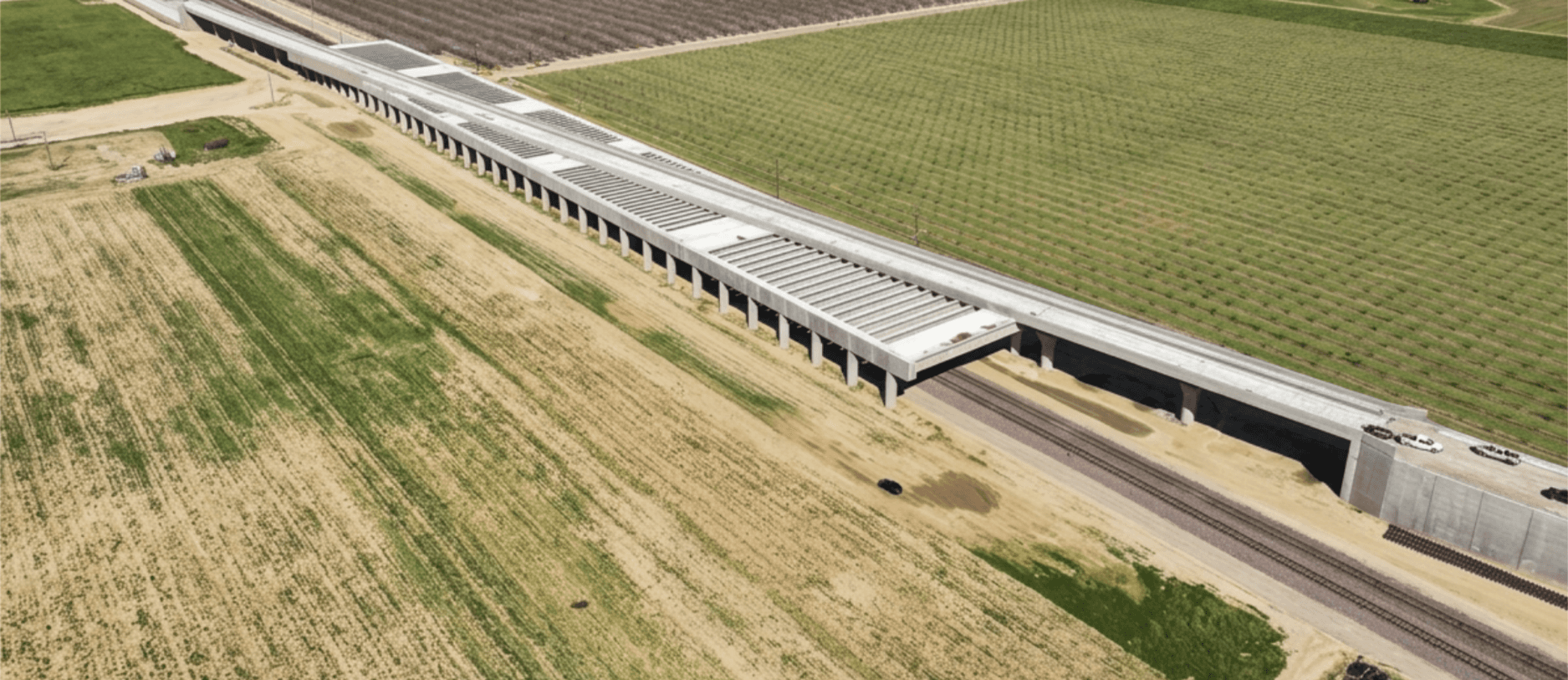
Eleven major structures were completed, including the Wasco Viaduct carrying HSR over BNSF tracks with 120 precast concrete girders, the Merced Avenue Overcrossing featuring 177-foot precast girders — the longest ever manufactured for a California state project — and the Poso Avenue Underpass providing four lanes of traffic beneath BNSF and future HSR. A pergola structure south of Wasco extends over 2,000 feet. Six miles of intrusion protection barrier wall were installed along the corridor.
An alternative technical concept developed during the bid phase eliminated the originally specified BNSF viaduct through Wasco in favor of an at-grade solution, contributing to a winning bid well below the Authority's estimate and reducing construction complexity in the urban core.
Outcomes achieved.
Structures completed:
11 major structures including viaducts, grade separations, and underpasses across the 22-mile alignment.Record-setting construction:
177-foot precast girders at Merced Avenue — the longest precast girders ever produced for a California state project.Railroad relocation:
4 miles of BNSF track relocated with over 32,000 linear feet of new mainline and temporary track constructed.Utility coordination:
143 utility relocations completed across six major utility providers and water districts.Jobs created:
Over 2,116 construction jobs created in Kern County.
The CP-4 segment forms a critical link in the 119-mile Central Valley spine of California's high-speed rail system, connecting the northern construction packages to the future southern extension toward Bakersfield.